Thursday, February 18, 2010

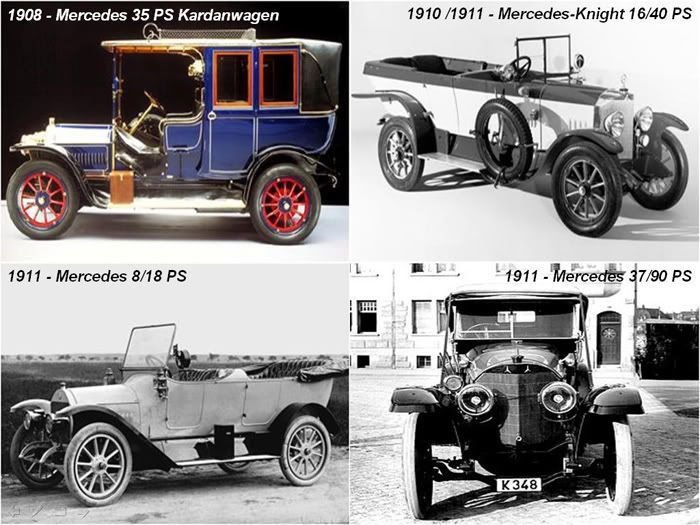
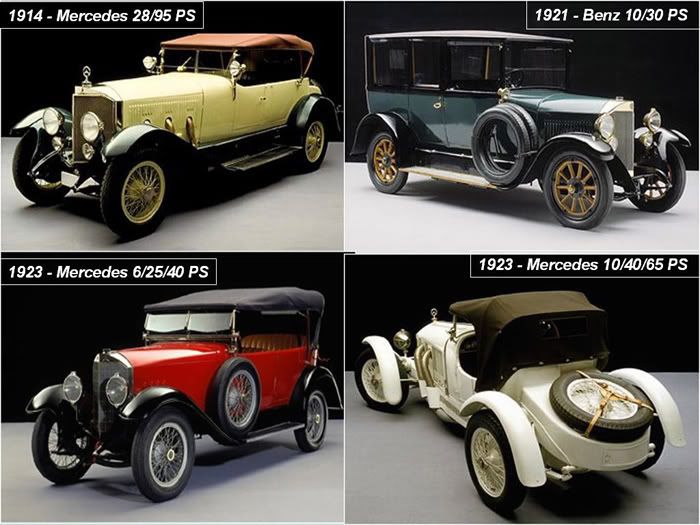
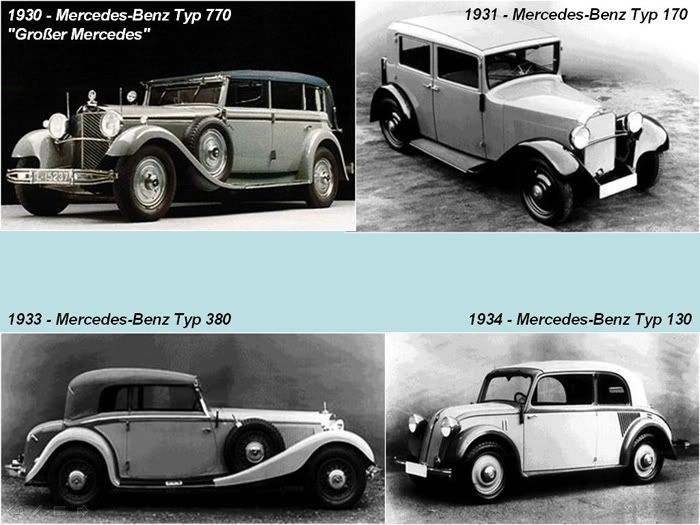
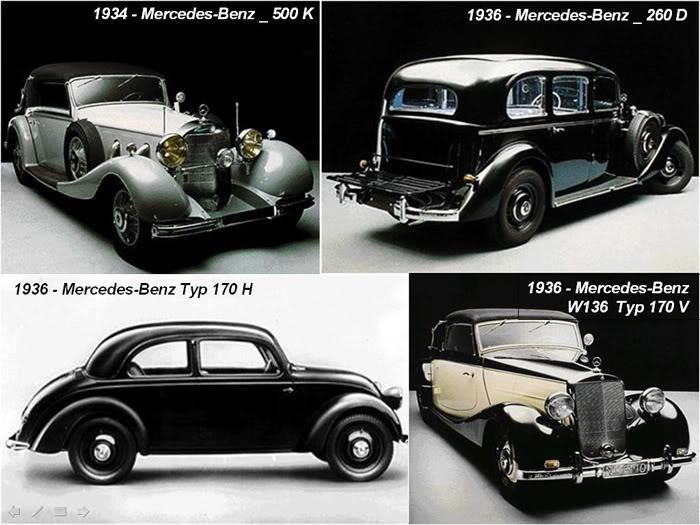
History Of Mercedes-Benz

Mercedes-Benz is a brand of car from DaimlerChrysler company (formerly known as Daimler-Benz), commonly known by the name Mercedes. Mercedes-Benz is the oldest car company in the world. Their cars have certain well-known high quality.

History

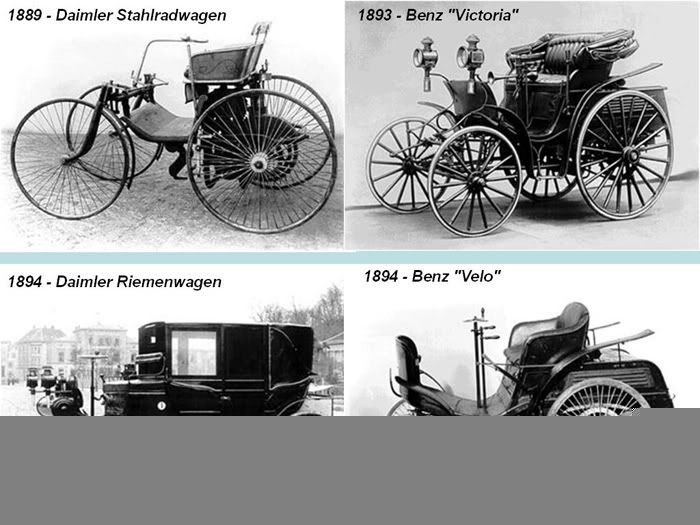
Origin of this company in the early 1880s, when Gottlieb Daimler and Carl Benz cars separately found in southern Germany. Daimler and Wilhelm Maybach, who together found a four-stroke engine, worked together in Cannstatt (a town in the district of Stuttgart); Benz had his shop in Mannheim near Heidelberg. There is no record of the two inventors ever met.

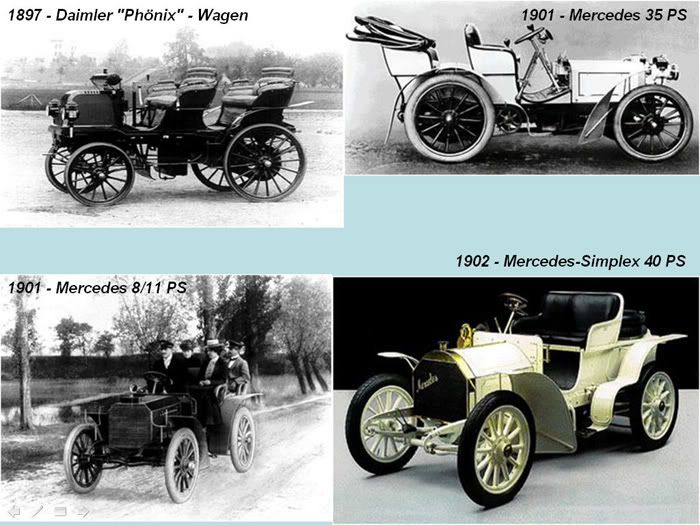
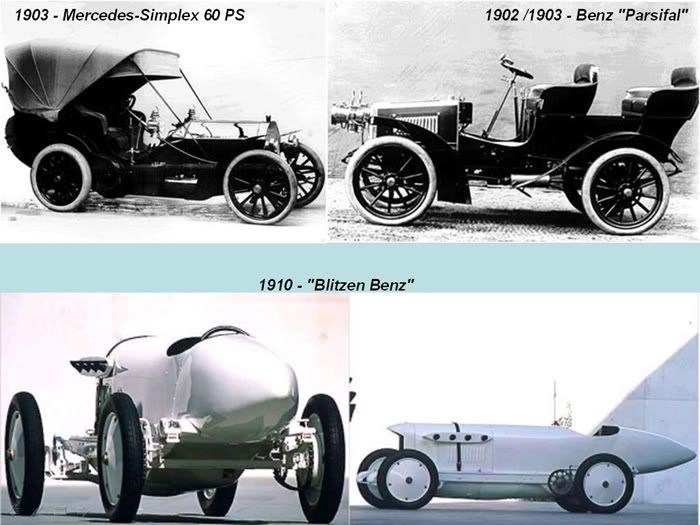
In the early 1900s, Daimler cars built in Untertürkheim (also a city district of Stuttgart) are sold with success by the Austrian agent named Emil Jellinek, who supplied the car with the name of his daughter, Mercedes. (TRanslate from http://id.wikipedia.org/wiki/Mercedes-Benz)

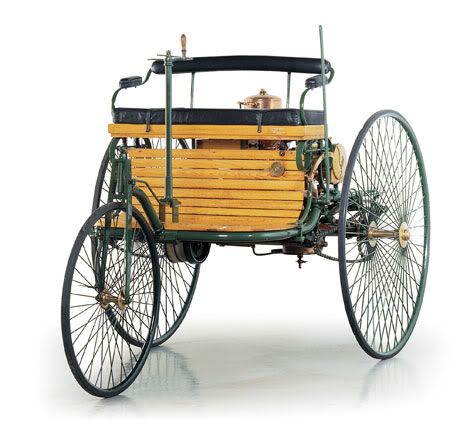
Spoiler for Mercy 1886:


Spoiler for Mercy 1914-1923


Spoiler for Mercy 1930-1934:


Spoiler for Mercy 1934-1936:


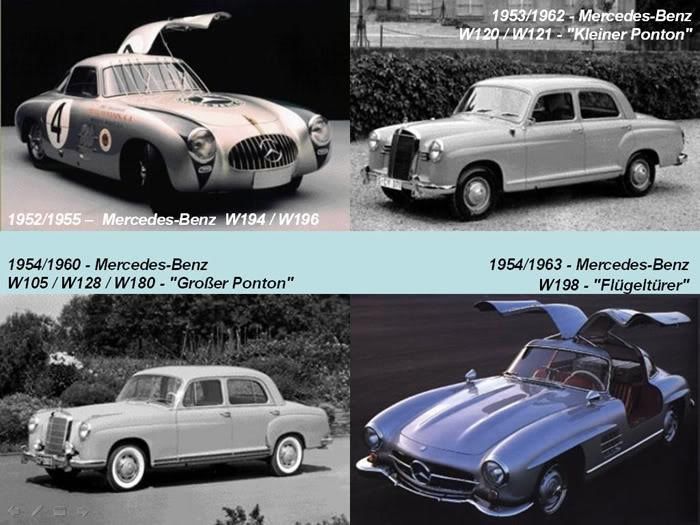
Spoiler for Mercy 1952-1954:


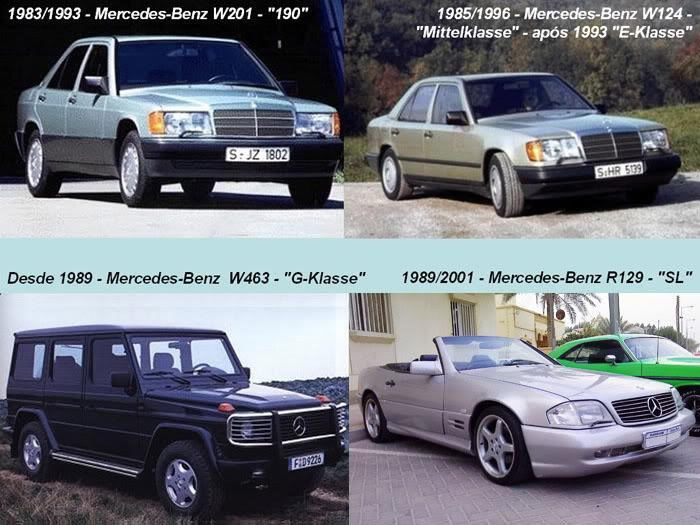
Spoiler for Mercy 1983-1989


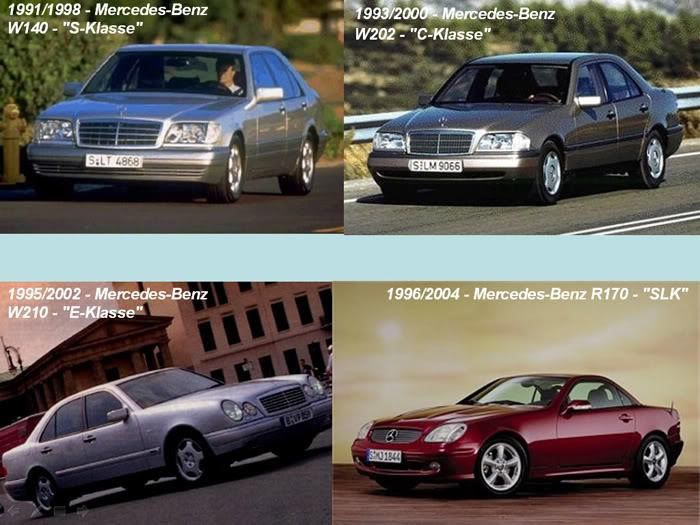
Spoiler for Mercy 1991-1996


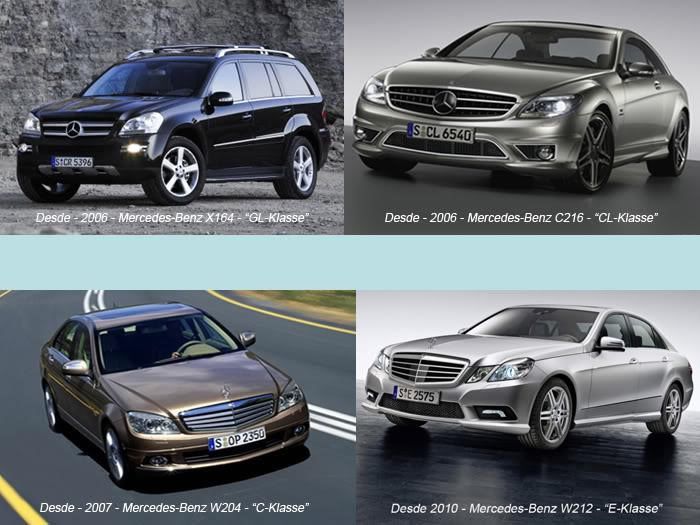
Spoiler for Mercy 2006-2010


Mercy 2010

Discovery’s HD Theater outlines the start of WRC coverage for 2010

Assuming for a moment that you won’t be watching any stages live, what could possibly be better than strapping into the living room recliner and watching World Rally Championship coverage here in the United States? How about watching that very same coverage in glorious high definition? You’re in luck, as Discovery’s HD Theater plans to air the entire 2010 season, the start of which is coming up fast.
The action will begin on Thursday, February 25th at 10 PM Eastern with the Rally Sweden event. Racing will continue on Friday and a follow-up episode will be aired the following Sunday night from 10-11 PM ET. The second race, the Corona Rally Mexico, will follow the same schedule from Thursday, March 18th through Sunday, March 21st.
Ken Block Monster World Rally Team Ford Fiesta
In case you’re wondering, Ken Block will indeed be taking part in the 2010 Rally Sweden behind the wheel of his brand new Ford Focus RS, giving American viewers a hometown hero to pull for. Air dates for the remainder of the 2010 WRC season will be announced later.

Monday, February 8, 2010

2011 Ford Focus Review and Prices


Ford is redesigning its compact car with a renewed focus on “whole-earth” appeal--in more ways than one. International style, high-efficiency powertrains, and green-tech engineering should make it a strong competitor from Boston to Beijing. A full-electric version could prove popular too, especially if gas prices go through the roof again.


What We Know About the 2011 Ford Focus


We know it’s a bit early to be talking about the 2011 (or will it be 2012?) Ford Focus. But we also know that a full redesign of this compact car is already underway, and we can make some educated inferences about it based on recent announcements by Ford executives, competitors’ likely moves, and general industry trends.

All Ford Focus Prices & Reviews

Prices & Reviews of All New Ford Sedans
Reviews of All New Ford Vehicles
For starters, the 2011 Ford Focus will be a true “world car,” sold around the globe with only relatively modest tailoring for local needs and tastes. The debut year-2000 Focus was a “world car” too. But where Europe and other overseas markets got a redesigned replacement in 2005, Ford kept the original “C1” design for North America as a cost-saving move. Though that seemed prudent at the time, it meant the model was bound to fall behind key competitors. Sure enough, most of them have been redesigned twice since the millennium turned, so the North American Focus now seems dated despite a 2005-model freshening and an even more-extensive redo for ’08.


Under the “One Ford” product strategy ordained by CEO Alan Mullaly, the next-generation Focus is being designed and engineered by Ford Europe, the company’s designated center for global small-car development. The aim is to trim upfront costs and boost manufacturing economies of scale with a single basic design that can be built and sold anywhere, rather than having disparate regional variations. That’s been the appeal of every world-car project since Ford’s own Model T, though only the original Volkswagen Beetle (and maybe the Toyota Corolla) has had similar global success.


Unlike today’s North American Focus, most of its overseas cousins use Ford’s newer C2 platform. So do the Mazda 3 and Volvo’s C30/S40/V50 compact cars. The replacement C3 architecture would presumably serve future versions of those models as well as the 2011 Ford Focus, but should be even more “scalable” to suit a wider range of vehicle types. That includes crossover SUVs and stylish compact people movers like Ford Europe’s popular Focus-based S-Max.

2011 Ford Focus Features
We expect the 2011 Ford Focus to be roomier than today’s car, as the C3 platform is likely to bring modest gains in width, height, and wheelbase. Overall length, however, will probably be unchanged or even slightly reduced. Because weight is the enemy of performance, fuel economy, and a car’s carbon footprint, we also see Ford paring pounds through greater use of aluminum, plastics, high-strength steel, and other lightweight materials--costly substitutions for this price class, but necessary in light of tough new U.S. fuel-economy standards and equally daunting Euro-zone caps on CO2 emissions.


Toward the same end, the 2011 Ford Focus should benefit from new high-efficiency front-wheel-drive powertrains that Dearborn is said to be working on. These involve a 6-speed dual-clutch automatic transmission and engines designed to do more with less. Dubbed PowerShift, Ford's new dual-clutch gearbox behaves much the same as a conventional automatic transmission. But the company says the dual-clutch transmission weighs less than a 4-speed auto, and helps increase fuel economy by about nine percent.


The U.S.-market Focus will get a clean-sheet 2.0-liter 4-cylinder, with direct fuel injection and variable valve timing. Other gas-fueled engines are possible as well, and we also see the possibility of a “clean-diesel” counterpart and maybe even a 4-cylinder turbodiesel. The European Focus already offers thrifty “DuraTorq” diesel fours, but the upcoming engines would be even cleaner and thus 50-state legal. Nevertheless, a diesel-powered 2011 Ford Focus could well boast EPA-rated fuel economy of 40 mpg city and 50 highway--as indeed it will need to with the way fuel prices are going.

2011 Ford Focus Additional Features
We haven't heard any official word on a gas-electric hybrid version of the Focus, but Ford has confirmed that a full-electric version will go on sale in North America during 2011. A so-called Battery-Electric Vehicle (BEV), the all-electric Focus is being developed in partnership with auto supplier Magna International and will be built in Michigan. Details are still sketchy, but Ford is suggesting a possible 100-mile range using a lithium-ion battery pack that can be charged through a 110-volt or 220-volt outlet.


As for styling, company designers are said to be collaborating on a new global Ford-brand look that reconciles Europe’s current “kinetic” motif with the “Bold American” theme exemplified by the Fusion midsize car and Edge crossover SUV. Based on the pre-production models Ford has shown, the 2011 Ford Focus will look something like a cross between the current Taurus and Fiesta with a smooth lozenge shape punctuated by crisp sheetmetal creases and a big trapezoidal grille. An optional "Titanium" trim level adds sporty interior trim that is a bold combination of leather and technical fabrics. It is a classy, complex look that reminds some of Puma or Nike athletic shoes or clothing and could help the new Focus stand out in a crowded market.


A Notable Feature of the 2011 Ford Focus


A good many Americans could be downsizing their rides in the coming years, but they won’t want to sacrifice safety or convenience features for higher mpg and lower emissions. Ford is well aware of this from decades of doing business in Europe, where feature-laden, tech-filled compact cars are strong sellers. We thus expect the 2011 Ford Focus to have more standard equipment and a longer option list than today’s U.S. models. It will still be a competitively priced mainstream compact, but luxury features should proliferate to ease any buyer pain associated with going small. For example, Ford's new My Ford Touch control system and an improved version of the popular Sync system will certainly be available on the next-generation Focus.
2011 Ford Focus Buying Advice
There’s little advice we can give this far out, other than repeating the old common sense mantra about scouting the field before you buy. The 2011 Ford Focus could be a new class trendsetter, much as the original was back in 2000. But you know competitive brands won’t be sitting on their hands, so Ford’s redesign will have to be very good just to be a contender.


2011 Ford Focus Release Date: Ford recently announced that 4- and 5-door versions of the new European Focus will start North American production in late 2010. So the 2011 Ford Focus should be out of the gate by spring of 2011.


2011 Ford Focus First Test Drive: Again, assuming all goes well--including model-year 2011 timing--media previews could be set for the fourth quarter of 2010.


2011 Ford Focus Prices: Inflation keeps making everything more expensive, so a Focus will certainly cost more in the next decade than it does now. How much more? That’s tough to predict so far in advance, but we’d guess prices will start around $17,000, about $3,000 above today’s minimum, and range into the mid-$20,000s with a hefty option load. The BEV version will probably cost even more than a loaded gas-powered Focus. If that sounds like a lot for a small Ford, keep in mind that the Focus arrived eight years ago starting just under $12,000.

2011 Ford Focus Preliminary Specifications

The 2011 Ford Focus will be available as a 4-door sedan and 5-door hatchback (shown).

The Basics

Vehicle Type: compact car


Drivetrain (CG estimates)


Drive wheels: front


Engine: 2.0-liter 4-cylinder


Horsepower: 160


Torque: 160 lb-ft


Transmission: 6-speed manual, 6-speed dual-clutch automatic


Dimensions (CG estimates)


Wheelbase: 105.0 inches


Length: 174.0 inches


Width: 69.0 inches


Height: 58.5 inches


Base curb weight: 2,450 pounds


For more inside information on hundreds of new cars of today and tomorrow, check out:


C­onsumer Guide New Car Reviews and Prices: Road test results, photos, specifications, and prices for hundreds of new cars, trucks, minivans, and SUVs from the Auto Editors of Consumer Guide.
Ford: Read Consumer Guide's full reports, including ratings, prices, specifications, and fuel economy.
Compact cars: The 2011 Ford Focus will compete in the compact car class. Here's Consumer Guide's roundup of all the compact cars on sale today.
2010 Consumer Guide Best Buy and Recommended Award Winners:
Check out which cars won our Best Buy and Recommended awards for 2010.
Future Cars: Step into the automotive showroom of tomorrow with reviews, analysis, pictures, prices, and preliminary specifications on scores of vehicles that will be appearing next year and beyond.

2011 Nissan Leaf Review and Prices


Nissan released preliminary Leaf details at an early-August 2009 press conference that also inaugurated the company's new Yokohama headquarters building, which is designed to be just as green in its way as the new EV. Nissan did not reveal how much it's spent on the Leaf so far. Nor has it disclosed projected U.S. sales or vehicle price, likely because it doesn't have those answers yet. However, the company says Leaf should cost about the same as a conventional gas-engine compact car and have lower monthly running costs. More on those points in the "Notable Feature" section.

Compare Other Compact Cars

2010 Toyota Prius Pictures

2010 Nissan Versa Pictures
2010 Honda Insight Pictures


The 2011 Nissan Leaf employs a unique architecture designed to accommodate the specifically engineered electric powertrain. Leaf is a bit longer and wider than Nissan's Versa compact car, but looks very similar, which is deliberate. As Nissan design chief Shino Nakamura told Britain's Autocar magazine, "We wanted this car to be distinctive and recognizable as a Nissan, but not too 'out there.' It should look like a normal, familiar [vehicle], even if it won't drive like one."

Nevertheless, the 2011 Nissan Leaf does have sophisticated styling subtleties. The large sweptback headlamps, for example, are raised above the hoodline and shaped so as to channel airflow around the door mirrors. The aim is reduced wind noise and air drag, the latter to help maximize driving range. Yet like the Toyota Prius, Honda Insight, and other gas/electric hybrids, the Leaf has plenty of "green car" visual cues. These include blue-tinted LED headlamps, which have the added advantage of using half the electricity of conventional lights; an aero-functional spoiler above the rear window; "Zero Emissions" logos front, side, and rear; and a pug-like nose with a prominent central flap concealing the electric plug-in port.

In addition, we gather that the 2011 Nissan Leaf will initially come only in "Aqua Globe" blue, an "environmentally friendly" color that carries through inside. (Blue is the new green for planet-friendly cars.) The interior also sports Honda-style bi-level instrumentation, with a digital speedometer above a multi-function graphic display, and a central infotainment screen for an apparently standard navigation system. However, the Leaf's navigation map can also show recharging stations and "distance to empty" within range of a destination so drivers won't be caught with nowhere to plug in.

Speaking of which, the 2011 Nissan Leaf uses advanced lithium-ion batteries, actually a set of 48 modules weighing nearly 600 pounds and mounted beneath the cabin floor. The batteries power an AC motor with a rated 108 horsepower, about the same as the Versa's base 1.6-liter gasoline 4-cylinder engine, and 208 lb-ft of torque that approaches the twist output of 3.0-liter gas engines. Typical of small EVs, drive is to the front wheels through a single-speed reduction gearbox.

2011 Nissan Leaf Features
The 2011 Nissan Leaf was designed to be "distinctive and recognizable as a Nissan," and so resembles the company's Versa compact car. The 2011 Nissan Leaf is claimed to do 0-60 mph in just under 10 seconds and travel about 100 miles between charges. Nissan says that operating range "satisfies the daily driving requirements of 70 percent of the world's consumers who drive cars." Assuming the claimed acceleration proves out, the Leaf should be more than adequate for city-suburban use, especially for those drivers who can plug in at work.

On that subject, the Leaf includes an onboard 50kW DC "quick charger" that allegedly juices the batteries to 80-percent capacity in less than 30 minutes. Charging from a standard 110-volt household plug takes a long 16 hours, but using 200-volt service trims that to a more reasonable eight hours. Nissan believes many owners will "refuel" overnight to take advantage of lower off-peak electricity rates. Like many gas/electric hybrid vehicles, the Leaf also has a regenerative braking function to charge the batteries while driving.

Though chassis details and available features have yet to be released, the 2011 Nissan Leaf should follow conventional compact-car wisdom. That likely means a strut-type front suspension; a simple low-cost, weight-saving twist-beam rear axle; antilock brakes with electrohydraulic booster; and rack-and-pinion steering with full-electric assist. Front and curtain side airbags should be standard. Ditto 15- or 16-inch alloy wheels wearing low-rolling-resistance tires (possibly run-flats, again to save weight). We'd also look for standard electrically operated air conditioning and power windows, locks, and mirrors, as well as the above-mentioned navigation system.

On paper at least, the 2011 Nissan Leaf looks to be a thoughtfully designed, thoroughly engineered family EV that should be easy on the wallet, kind to Mother Earth, and as practical as any conventional compact car, at least for routine errand-running and shorter trips. Add in the near-term introduction, and Nissan could well be the new leader in the green-car sweepstakes.

A Notable Feature of the 2011 Nissan Leaf

The 2011 Nissan Leaf shares a nifty convenience with a much-costlier upcoming EV, the $50,000 premium midsize 2012 Tesla Model S sedan. It's a charging-system timer that allows owners to pre-program charging sessions and to turn on the climate system before driving so the interior is just the right temperature. What's more, the Leaf system includes a link that allows remote programming from your cell phone and sends e-mail alerts when recharging is complete. It can even keep tabs on your monthly electric bill. Talk about being connected.

But here's the truly unique aspect of the 2011 Nissan Leaf. This will be the only retail-market EV we know of where buyers will lease the battery pack instead of paying for it up front. As a company spokesperson explained to Autocar, "We believe that's the right strategy, because that way Nissan remains responsible for the longevity and recycling of the batteries, not the customer. Building the battery in with the car would also add at least [$7,200] to the [purchase] price; the battery lease should cost less than [$120] a month," which Nissan reckons will be less than a month's worth of gasoline for most owners. Moreover, the Leaf battery pack is less expensive to begin with, or so Nissan claims, thanks to positive electrodes made of manganese instead of cobalt or nickel. This proprietary chemistry is the result of corporate battery research that's been going on since 1992.

2011 Nissan Leaf Buying Advice

The 2011 Nissan Leaf has gauges mounted in a two-tier dashboard setup just ahead of the steering wheel. Most automakers are putting their green-car bets on gasoline/electric hybrids of one type or another. That includes General Motors with its 2011 Chevrolet Volt, which is designed to run mostly on battery power but carries a gasoline engine as an onboard generator to extend driving range (up to 620 miles, GM says). By contrast, the 2011 Nissan Leaf runs solely on battery power and is thus a true zero-emissions vehicle--not counting greenhouse gases or other pollution produced by power companies. We mention this distinction because it undoubtedly matters to some buyers.

Like most other EVs, the 2011 Nissan Leaf has fewer components than a fossil-fuel car, which implies relatively lower maintenance costs, higher reliability, and perhaps greater durability. In addition, the Leaf is expected to qualify for the $7,500 federal tax credit on new EV purchases, thus making the car even more affordable.

The 2011 Nissan Leaf won't have much direct competition, as only a handful of "pure" EVs are due in showrooms over the next few years. Chrysler has promised an electric of some kind in 2011-12. Ford plans to sell an electric version of its new Transit Connect compact van in 2010, followed by a battery-powered Focus compact car. The one other mainstream-priced electric on the horizon is the 2011 Coda EV, but that Sino-American midsize sedan is expected to run $37,500 with the tax credit applied and will be sold only in California at first. So, although the Leaf may not be the first consumer EV on the market, it may well have the biggest impact in terms of affordability and thus sales.

Incidentally, the Leaf and its batteries will be initially sourced from Japan, but Nissan says it is planning "additional capacity" for its U.S. plant in Smyrna, Tennessee. And in fact, the company recently received a $1.6 billion low-interest federal loan precisely for that purpose. Nissan also plans to build Leaf in several other countries. As always, localized production makes good sense in the auto business, because it helps get around unfavorable changes in currency values, which can adversely affect pricing, and it tends to shorten delivery times to dealers and customers, both vital factors in a highly competitive global economy.

2011 Nissan Leaf Release Date: As noted, the Leaf will start U.S. sale toward the end of calendar 2010 as a 2011 addition to the Nissan lineup.

2011 Nissan Leaf First Test Drive: The above timing suggests U.S. media previews could be held in the summer or early fall of 2010.

2011 Nissan Leaf Prices: There's nothing official yet, but a company press release says the 2011 Nissan Leaf will "be competitively priced in the range of a well-equipped C-segment vehicle." That means compact cars including Nissan's own Versa and Sentra, the new Chevrolet Cruze and redesigned Ford Focus due for 2011, plus Honda Civic, Hyundai Elantra, Kia Forte, Mazda 3, and Toyota Corolla. But with the likely steep cost of Leaf's electric drive, it's no surprise that one source is estimating a base price at around $30,000, which is pretty rich for a compact car. Will enough buyers look past that so the Leaf turns a profit? For Nissan, of course, that is a multibillion-dollar question.

2012 Audi e-tron Review and Prices


Despite recent technical advances, batteries are still pretty darn heavy and thus an obstacle to making EVs as weight-efficient as conventional cars. The 2012 Audi e-tron concept proves the point. For all the expensive pound-paring measures, it tips the scales at a fairly hefty 3,527 pounds, of which the batteries account for nearly a third. This helps explain why Audi put the batteries amidships. The resulting front/rear weight distribution works out to 42/58 percent, appropriate for a “mid-engine” sports car and on par with R8 ratios. The electric all-wheel drive is biased to suit, providing a normal power split of 30 percent front, 70 percent rear, and theoretically capable of sending all power to any one wheel, though Audi hasn’t yet spoken on that point.

Again like the concept, the production 2012 Audi e-tron should come with an “active-aerodynamics” package to further maximize efficiency and extend driving range. The term refers to a set of inner-body flaps and ducts arranged to smooth airflow over, under, around, and even through the car to reduce power-wasting air drag, especially at highway speeds. The concept does without a rear spoiler or other obvious “aero”-styling features, but designers have replaced conventional door mirrors with slim pods containing small rearview TV cameras that display on screens at the base of each windshield pillar inside. Audi hasn’t yet made aerodynamic claims, but we’d guess a low drag coefficient of 0.29 or better, judging from the smoothly contoured body lines.

The Competition

Mercedes-Benz SLK Class EV

Mercedes-Benz SLS AMG EV
Tesla Roadster

Also for efficiency’s sake, the 2012 Audi e-tron should inherit the concept’s low-power LED exterior lighting, something Audi has lately helped pioneer on production cars. The e-tron setup goes a step further in being able to vary headlight intensity, as signaled by a computer-linked camera, to match weather and traffic conditions; this also eliminates the need for separate fog lamps. Of course, the headlights are steering-linked. Still, Audi designers couldn’t resist a little visual brag, so the concept’s big “single-frame” grille is filled with LEDs that glow ice blue at night to make a positive, can’t-miss “environmental-impact statement.” We suspect this, too, will carry over to the production model.

The 2012 Audi e-tron should also inherit the concept’s ultra-clean, post-modern cockpit design with a dashboard, center console, and door panels that are styled and color-contrasted for a “floating” appearance. Drivers face a simple gauge cluster with a large, round speedometer and energy-use dials flanking a good-size screen for displaying navigation, climate, and infotainment info, as well as trip and traffic data. The screen is integrated with a new version of Audi’s MMI infotainment controller that retains a rotary knob and several buttons on the console, but is otherwise operated from the steering wheel by a smart phone-inspired touch pad. The gear selector is a wide paddle that rises into position on pushing the nearby “vehicle start” button, rather like the rotary shift knob on current Jaguars. This being an electric, the selector has but three positions: Drive (Forward), Neutral, and Reverse. A button directly below it operates an electronically actuated parking brake.

We’d expect the 2012 Audi e-tron will post excellent crash-test results, as engineers were doubtless mindful of the need to prevent impact forces from moving the high-voltage electrical components too close to occupants. A full set of airbags can be taken for granted. Other standard features are unclear at this early stage, but Audi’s new technical showcase will doubtless be very hard to get and very expensive, so it won’t lack for much, if anything. That should mean items like front- and rear-obstacle detection, rearview camera, and a mega-watt audio system (though that’s arguably less necessary in a near-silent EV). One final piece of equipment is a real gee-whizzer, but we’ll save that for “Notable Feature” below.

So what can you expect of the 2012 Audi e-tron once it hits the road? Plenty. Audi says the concept would do 0-62 mph (0-100 km/h) in 4.8 seconds “if necessary” and run a 37-75 mph sprint in just 4.1 seconds. Top speed is limited to a shade over 124 mph. Project Chief Krauter told Autocar that the e-tron will reach 160 mph, “but traveling at those speeds takes too much power out of the battery too quickly,” and that’s evidently a no-no for consumer EVs. Fuel economy? Audi isn’t quoting a miles-per-gallon equivalent, doubtless because the final product will have different calculations from the concept’s. The company does, however, claim a maximum driving range of 152 miles between charges, which is pretty good by current EV standards.

First reports from Frankfurt indicated that Audi was hesitating about a showroom e-tron because the concept apparently missed engineers’ targets for range, performance, and durability. The subsequent change of heart suggests either Audi believes it can meet those targets over the next three years--or that management just doesn’t want BMW, Mercedes, or any other premium brand to be first with an upmarket retail EV.

So yes, the parade down Electric Avenue has become a race for bragging rights and extra sales. It will be great fun to watch.

A Notable Feature of the 2012 Audi e-tron

Just as cell-phone technology now allows most any two people on earth to be connected, government planners, highway engineers, and traffic-safety experts are working toward the day when cars can communicate with each other as well as with satellites and ground stations. Audi calls this “car-to-x communication,” and touts a prototype for such a system as a special feature of the e-tron concept. No details are given, but the ultimate goal is a kind of rolling data network with all vehicles uploading and downloading information in real-time. Audi sees all this data being harnessed to reduce traffic congestion in crowded urban areas (via rerouting and “smart” traffic-light timing); to alert drivers on changing weather and traffic conditions, as well as the movements of vehicles nearby; even to help locate empty parking places. More crucially, such a network could help EV drivers locate the charging stations and battery swap-out facilities that are in the works as a necessary part of a supporting electric-vehicle infrastructure.

Engineers and various dreamers have talked about something like this for decades, and a few small-scale traffic-management systems have been operating in Europe and Japan for several years, though they rely on satellite signals and lack car-to-car capability. Still, “car-to-x” is rapidly becoming feasible, thanks to more-powerful computers and ever-lower hardware costs. Mind you, it’s still a good ways off, as Audi admits, but the company notes that “nearly every car maker in Europe, the U.S., and Japan have decided to develop a common standard for hardware and software. Once all new cars are equipped with this technology, a functional network of automotive transmitters will soon be available, at least in large population centers.” Nice though, but we may need another “cash for clunkers” program to pay for it.


2012 Audi e-tron Buying Advice


The 2012 Audi e-tron has no outside mirrors. Instead, screens on the base of each windshield pillar provide rear views. The e-tron Concept is shown here.

There’s little advice to give right now except to wait and see how good the finished product really is. As noted, the 2012 Audi e-tron concept looked virtually ready for production, so we suspect a little tweaking here and there is all Audi engineers have left to do. On the other hand, making batteries stronger (to extend driving range) is never easy, and we can see Audi accountants working overtime to ensure the e-tron will turn a profit, or at least not lose any money.

If nothing else, the 2012 Audi e-tron should spark up the high-end sports-car scene, especially if it arrives before battery-powered entries from BMW, Mercedes, and maybe others. Only one such car is currently on sale and that’s the $109,000 Tesla Roadster, which is assembled mostly by Lotus in England with an American-designed powertrain, and which has been hard to get for reasons that have little to do with Lotus or the car itself.

2012 Audi e-tron Release Date: There’s nothing official yet, only word from Audi of America Chief Johan de Nysschen that the e-tron will be on sale within three years. Various outside sources suggest the car will bow as a 2012 model, though it could be an ’11 or ’13, depending on how things go.

2012 Audi e-tron First Test Drive: Assuming Audi can stick to the intended schedule, we’d look for a series of ride-and-drive previews, perhaps starting in late 2010, to build up interest and keep e-tron in the news until the first customer cars are delivered.

2012 Audi e-tron Prices: With the new V10-engine R8 5.2 starting at $146,000, the 2012 Audi e-tron will certainly price a good deal higher. It does, after all, employ similar aluminum-space frame construction, plus carbon-fiber body panels and a half-ton of Li-ion batteries, none of which come cheap. So how much might it cost? We can only guess at this point, but $200,000 isn’t out of the question, especially as this car would probably be built largely by hand and marketed as a green-technology flagship available to a monied few with an environmental conscience. But the rest of us needn’t despair. As we see it, the e-tron is really a testbed for EV-production methods and real-world owner experience that will pave the way for more-affordable all-electric Audis later in the coming decade.
2012 Audi e-tron Preliminary Specifications


The 2012 Audi e-tron may cost about $200,000. The e-tron Concept is shown here.

The Basics

Vehicle Type: premium sporty/performance car

Drivetrain (concept; manufacturer data)

Drive wheels: all

Engine: 4 asynchronous electric motors (2 front, 2 rear) with 42.4 kw/h lithium-ion battery pack

Horsepower: 313

Torque: 3,319 lb-ft

Transmission: 2 single-speed reduction gearboxes

Dimensions (concept; manufacturer data)

Wheelbase: 102.4 inches

Length: 167.8 inches

Width: 74.8 inches

Height: 48.4 inches

Base curb weight: 3,527 pounds

For more inside information on hundreds of new cars of today and tomorrow, check out:

2010 Audi R8 Review and Prices

2009 Consumer Guide Best Buy and Recommended Award Winners: Check out which cars won our Best Buy and Recommended awards for 2009.
Future Cars: Step into the automotive showroom of tomorrow with reviews, analysis, pictures, prices, and preliminary specifications on scores of vehicles that will be appearing next year and beyond.

2012 Cadillac Converj Review and Prices


The concept featured an all-glass solar-cell roof to help power accessories and--because this is a hybrid--electro-hydraulic brakes and steering. It's one of several showcar gizmos that might nevertheless carry into showrooms. So, too, other futuristic features detailed in "Notable Feature" below.

The 2012 Cadillac Converj should also mimic the concept in wearing Cadillac's signature "Art & Science" styling tailored to decidedly cab-forward proportions. It's reminiscent of the 2002 Cadillac Cien showcar, and got generally good reviews at Detroit. The angular theme carries to the interior, which is all V-shapes and triangles save flowing, gently indented door panels and curvy door-pulls spilling down from the upper dash rail.


Beneath the concept's Stealth-fighter looks lies the same basic chassis developed for the Chevy Volt. That means the 2012 Cadillac Converj will have a strut-type front suspension, a simple twist-beam rear axle and four coil springs. It should also get GM's "magnetic ride" auto-adjust shock absorbers, a premium feature apparently denied the Volt. Brakes are predictably four-wheel discs with ABS. Look for standard GM Stabilitrak antiskid system and traction control as upgrades over the Volt. We're less certain about the concept's 21-inch front wheels and 22-inch rears, all premium forged-aluminum rims, but don't be surprised if they also make production, at least as optional equipment. Tires should definitely be of the fuel-saving low-rolling-resistance type.

2012 Tesla Model S Review and Prices


When it's time to plug-in, owners can use 120-, 240- or 420-volt outlets, whichever is handy. There's also an onboard charger, so we assume the 2012 Tesla Model S includes a regenerative braking function for juicing the batteries while driving. The brakes themselves are Brembo-brand 4-wheel discs, presumably with ABS. A final factoid for you: The styling has a claimed drag coefficient of 0.26, a low number shared with the compact Toyota Prius hybrid and just as necessary here to minimize power-sapping air drag at highway speeds.


The 2012 Tesla Model S will be sold as a fully equipped car with all the conveniences, a wood-and-leather interior, and a couple of novel items detailed below under "Notable Feature." But as with the $80,000 Fisker Karma extended-range hybrid sedan, due in 2010, initial Model S production--perhaps no more than 100 units--will be a collector-ready Signature Series version with one-time-only trim and colors. A Sport model is due later on. It reportedly does 0-60 in under 5 seconds, presumably via a larger electric motor, stronger batteries, or both. There will be few regular options, according to information on Tesla's website: The extended-range batteries, a full-length panoramic glass roof with opening panel, a power liftgate, and a "remote-vehicle-management" system for charging, personal seat and climate settings, and "data collection" (whatever that means).

From what we can tell, the 2012 Tesla Model S could be that rare car that appeals to gearheads, greenies and growing families all at the same time. It's certainly very much in line with Consumer Guide's notions for what 21st century cars should be: Clean, quiet, practical, environmentally benign, and reasonably affordable. If it proves to be as good in real life as it looks on paper--and however you feel about corporate rescues--the Model S would seem to justify lending Tesla some of our hard-earned tax dollars.

A Notable Feature of the 2012 Tesla Model S

Besides having a trunk at each end, including a wagon-like rear cargo hold, the 2012 Tesla Model S is the only sedan we know of with a 3rd-row seat. We haven't seen it in action, but it's said to be suitable for two pre-teens, which means it likely folds up from the rear-trunk floor to face forward. Another novelty, which we have seen, is the simple dashboard with a hooded electronic gauge cluster, rotary light switch, and a trio of steering-column stalks. Most everything else--including climate, navigation and infotainment functions--is controlled through a pair of centrally mounted touch-screens measuring no less than 17 inches, which is huge for a passenger car. The system is said to include an Internet link as well as the expected phone and music-player connectivity.

Saturday, February 6, 2010

2012 Buick Excelle Review and Prices


General Motors gives its weakest domestic brand a new compact sedan as another hoped-for sales booster. Excelle is a timely move, but can a gussied-up Chevrolet Cruze help Buick in such a rough-and-tumble market?

What We Know About the 2012 Buick Excelle

Buick will soon offer its first North American compact car since 1997. The move is part of a big shakeup that’s been going on at parent General Motors since the automaker emerged from its historic government-brokered bankruptcy in summer 2009.


That swift 40-day court trip cleared much of the company’s huge profit-killing debt load and netted a $50 billion taxpayer lifeline. It also forced slimming down to four “core” domestic brands. Now GM is under pressure to regain public confidence by delivering gotta-have vehicles that will sell well enough for the company to become profitable again and pay back taxpayers. That’s why a new government-vetted board of directors, chaired by former AT&T CEO Edward Whitacre, has been wielding a very big broom lately, cutting needless layers of management, firing old hands with old ideas, spending money to speed-up new-model rollouts, and working to streamline most every other part of the business. It’s a tough job, but everything depends on doing it right. As Joseph Phillipi, of the consulting firm Auto Trends, told the New York Times, GM must “establish themselves as the benchmark for comparison in each [market class] they’re in, as opposed to following everyone else.” Whitacre knows this too. As he recently declared to a group of GM employees, “Our mission is to design, build, and sell the world’s best vehicles”--a tall order, given recent history.

A top priority for “New GM” is rebuilding Buick, arguably its weakest domestic nameplate and a symbol of the old company’s decades-long slide to money-losing mediocrity. Buick sales have long suffered from the brand’s geezer image and products appealing mainly to an elderly clientele that continues to diminish. But Buick has also lately been starved for product, and is currently down to just three models. Though the LaCrosse midsize sedan and Lucerne large sedan have barely registered on consumers’ radar, the new-for-2008 Enclave premium-midsize SUV has been a brisk seller, at least by recent Buick standards. GM hopes to build on that momentum with the redesigned 2010 LaCrosse and a smaller but related new Regal midsize sedan, the first since 2004. The Regal is due to start sale in the second quarter of 2010 as an early 2011 model, initially with one trim level and a single powerteam. More versions are promised for model-year 2012.

2012 GMC Granite Review and Prices


A GMC for the under-30s? Yup, the Granite Concept signals a "professional-grade" compact to rival the Scion xB, Kia Soul, and other youth-oriented vehicles. It's a calculated risk, but a necessary one.


What We Know About the 2012 GMC Granite


Automakers have no money to waste in today's brutally competitive market. So when you see a concept vehicle like the GMC Granite, it's a pretty safe bet that something very much like it will be heading for showrooms. Indeed, many concepts are little more than thinly disguised previews of a production model that's already finished and ready to launch.


Still, you might wonder how can we be so sure about the Granite. It is, after all, the smallest vehicle ever to wear the GMC label, and thus seemingly at odds with the brand's "professional-truck" macho mojo. But that's the point. General Motors is down to just four brands after its historic 2009 bankruptcy, and narrowly focused GMC (Buick and Cadillac, too) must do more for sales and profits than ever before. That implies new products and out-of-the-box thinking to counter reduced demand for GMC's traditional large SUVs as buyers keep flocking to car-based compact and midsize crossovers. That's why GMC introduced the large-midsize Acadia two years ago and added the smaller midsize Terrain for 2010. Tightening federal fuel-economy standards and fast-growing interest in low-emission vehicles are other reasons why the brand is showing a softer side nowadays.


A compact crossover seems the next logical step, hence the Granite. Its mission is simple: Expand the brand's customer base. As product marketing director Lisa Hutchinson put it in a press release, the Concept "Granite was conceived as a new type of vehicle from GMC - one that could stretch people's idea of what a GMC can be. We call it an 'urban activity vehicle' and our goal was redefining what the GMC name could mean to a new generation of customers..." That sounds pretty serious, and though GM hasn't yet confirmed a production model, we'd be surprised if the 2012 GMC Granite isn't a done deal already.


Experience suggests the production 2012 GMC Granite will look much like the boxy concept, with a similar pug nose, big grille, dropped front fenders, cut-off tail, a modestly raked profile, and brushed- or satin-finish trim to replace chrome accents in keeping with the urbo-industrial design theme. Bodysides are an interesting mix of concave and convex surfaces, punctuated by a big "hockey stick" and other edgy lines, plus bulging wheel arches and prominent lower sills. We rather like this styling with its "baby bulldog" air, especially as it doesn't betray the Granite's compact size, more of which in a moment.

2012 Tata Nano America Review and Prices


A version of India's new "people's car" may come to America with a chump-change $7,000 price. Add in urban-jungle agility, high mpg, and surprising space, and this cute puppy could spell trouble for other U.S.-market minicars.

What We Know About the 2012 Tata Nano America


It's being called a 21st-century Model T, a masterpiece of cost-effective engineering, a new "people's car" that will change the global auto industry and millions of lives. It's the Tata Nano, revealed in early 2007 and finally available in its native India at a starting price of just $2,500.


Ratan Tata, CEO of the Tata Group combine, was determined to build a genuine four-passenger car that would be priced only a bit higher--and be much safer--than the small motorcycles most Indian families use to tote three and four people at a time. The result is a tall, egg-shaped 4-door with about the same footprint as the original 1960s British Mini, minimal equipment, and a rear-mounted 2-cylinder engine making 35 horsepower from 624 cubic centimeters. Top speed is barely 65 mph, the comfortable cruising pace only 55 mph.

The India-market Nano may be too Spartan for First World countries, but it's just right for the millions of Third World consumers who crave a car but could never afford one before. As Ravi Kant, the head of the Tata Motors division, recently told The Economist magazine: "Through the explosive growth of cellphones and television, the aspirations of rural people are converging with [those of] urban people...The interest in the Nano is worldwide."

So perhaps it was no surprise that Tata presented a deluxe version at the March 2009 Geneva Auto Show even before home-market deliveries were underway. Though this Nano Europa was billed merely "for future launch" in developed countries, Mr. Tata later said that the Europa would likely start sale on the Continent in 2010 or 2011. Since then, one source has reported that Italy, Spain, Poland and the UK will be the initial markets. More important for U.S. consumers, Mr. Tata says his team is also working on a U.S. edition, what we call the 2012 Tata Nano America. It would take on the Smart ForTwo, the Korean-built 2011 Chevrolet Spark, a likely Toyota or Scion iQ and a possible 2011 Ford Ka in what's shaping up as a whole new market class.

2012 Volkswagen Up Review and Prices


The main styling changes allegedly involve longer noses for housing the front-mounted powertrain, plus a slim-line grille bearing a big VW logo and a conventional bumper to replace the concepts' blunt "smiley-face" lower fascia. Wagons should also switch to conventional rear doors; the show models had pickup-style rear-hinged back doors. Note that the specifications listed here are based on CAR magazine's reports. Assuming they're right, hatchback Ups will be somewhat larger than the two-passenger Smart and "3+1" iQ, casting about the same shadow as a 5-seat 2-door Toyota Yaris. Wagons should have about the same footprint as the BMW Mini Clubman, but will stand 3-4 inches taller.

ight: 166px;" src="https://blogger.googleusercontent.com/img/b/R29vZ2xl/AVvXsEj-w4PG9a5muNrJ3DzyrIiQekEmr-kVx6YkPUffLKxsxfEtCY-YOzfBF4fGcwc2mC02LG7cPnuaHEm9zUBpKeV3GiLs3TeuLM-0zn-RuVwA54yY9ZMsxer2_vq0mRNLNukoFCITlRodHquQ/s320/20.jpg" border="0" alt=""id="BLOGGER_PHOTO_ID_5435150367198409058" />

2010 Toyota Avalon: Overview


Vehicle Highlights
The 2010 Toyota Avalon sees no major changes. This large car is a front-wheel-drive, five-passenger sedan offered in XL, XLS, and top-line Limited trims. It has a 268-hp 3.5-liter V6 engine paired with a 6-speed automatic transmission. Available safety features include ABS, traction control, antiskid system, curtain side airbags, and front side airbags. Exclusive to Limited are keyless entry/engine start and heated and ventilated front seats. All models have rear seatbacks with adjustable recline. A navigation system is available for XLS and Limited.

COMPETITION
Consumer Guide Automotive places each vehicle into one of 18 classes based on size, price, and market position. Large Cars comprise the biggest passenger sedans. Large inside and out, they offer lots of metal for the money and are dominated by domestic brands.

Our Best Buys include the Buick LaCrosse, Ford Taurus, and Toyota Avalon. New or significantly redesigned models in the class include the Buick LaCrosse and Ford Taurus.

2013 Smart ForFour Review and Prices


Smart may revive its ForFour model and bring it to the U.S. for the 2013 or 2014 model year. The 2006 ForFour is shown here. See more pictures of small cars.
Consumer Guide's Impressions of the 2013 Smart ForFour

Rumor has it that Mercedes' minicar division will add a four-passenger model--again. The new ForFour hatchback seems a smart idea (sorry) and a sure thing for the U.S.


What We Know About the 2013 Smart ForFour


It looks like the minicar subsidiary of Mercedes-Benz parent Daimler AG is going back to the future. European sources say Smart is planning a 4-door, four-passenger hatchback to supplement its teeny 2-door, two-passenger ForTwo coupe and convertible. Smart once offered such a car, the Dutch-built ForFour, but it was sold only in Europe and didn't sell well enough to stem persistent financial losses; it was yanked after just two years (2004-06). The new 2013 Smart ForFour, which is also being rumored for the "ForTwo+2" name, is not expected until calendar 2013 at the earliest, which could mean a 2014-model U.S. debut. There's also talk of a new three-passenger Smart Roadster as a spiritual successor to the two-passenger Euro-market sports car of 2003-05. More on that in the "Notable Feature" section.


The Smart brand launched in 1998 with the iconic City Coupe, later named ForTwo. That car was never officially sold in America, but developed a cult following that led to a good many being brought in privately. The ForFour and Roadster were intended to broaden Smart's Euro-market appeal and turn the company's ledger from red ink to black. Instead, they only made matters worse. That's why Daimler decided to reset Smart by focusing solely on a redesigned ForTwo and to sanction official U.S. sales for the first time--albeit through an independent franchise, Smart USA, owned and operated by Penske Automotive Group. (Daimler execs evidently blanched at the idea of American Benz dealers selling teensy two-passenger minicars alongside grand S-Class sedans.) Helped by initially solid U.S. ForTwo sales (starting with model-year '08), Smart finally made a small profit, prompting new ideas for additional models to extend the brand's market reach.

Friday, February 5, 2010

Bentley’s Latest Luxury Car Shimmers


Bentley Continental is here to make you go bankrupt within a few instants. It costs $267,000 and would run at the speed of 204 MPH. The gas guzzler tax and delivery charges are extra. The car comes with some serious specifications like 6.0 litre W!” and also 621 HP. It also has 590 lb-ft of torque which suggest the car is more powerful than you can imagine.

The car looks as stylish as any Bentley and you could certainly drive down Mulholland Drive in Hollywood. It would be interesting to drive down the road and feel the pinch of tragedies that have taken place there. If you can’t drive till Hollywood, any classy shopping area would be good enough to ride this car.

I would certainly love to have this car but unfortunately I am poor as a church mouse, which only leaves me gawking at all the fineries of the world and writing about them, instead of purchasing something even remotely expensive.

Ultra-Luxury Cars


According to R.L. Polk and Co., the "super luxury" segment (cars costing more than $100,000) is one of only two to show market growth over the last five years. R.L. Polk and Company is a global automotive information and marketing firm that provides solutions to automotive and related industries.

"The popularity of super luxury sedans among affluent American consumers has opened the door for automakers to roll out a whole new generation of innovative, amenity-laden models," said Eric Papacek, analytic consultant for Polk. "New models and concepts recently announced by Bentley, Mercedes-Benz, Rolls-Royce and Cadillac are clear signs that the uber car has returned to the American auto scene."
Highlights of the Ultra-Luxury Lineup

At the top of the luxury car market are two models that arrived on American shores in the last few years—the Rolls-Royce Phantom and the Maybach 57/62.

Five years ago BMW AG became the owner of the prestigious Rolls-Royce name, and in January 2003 the new owners showed off a new car at the North American International Auto Show in Detroit. The Phantom has a design instantly recognizable as a Rolls-Royce, with only the finest materials used throughout the vehicle. As many as 16 hides of leather go into each Phantom, and the automaker claims it to be the softest in the industry. Base price for a new Phantom: around $330,000.

Not to be outdone, Mercedes-Benz has brought back the Maybach name and put it on a set of ultra-luxury sedans. Named the 57 and 62 (based on vehicle length: 5.7 meters and 6.2 meters, respectively), the Maybach is quite different from the Rolls. Styling is more modern and the interior feels more high-tech. The 57 is considered a driver's car, while the 62 would likely be chauffeur-driven, referred to by the automaker as a "business jet on wheels." Featuring power-closing rear doors, a 600-watt audio system and reclining rear seats with power footrests, the Maybach 62 goes for around $375,000.

The Bentley brand stakes a time-honored claim in the ultra-luxury class. The sleek Continental GT is one of the fastest 4-seat coupes available in the world, boasting a 552 horsepower twin-turbo W12 engine that powers all four wheels. Not only is it the first all-wheel-drive Bentley, the Continental GT also is the least expensive, with a starting price at a mere $159,900. Joining the Continental GT coupe last year was the 4-door Flying Spur. The Flying Spur shares styling with its coupe sibling, as well as the powerful W12 engine and all-wheel drive.

The ultra-luxury sedan from Bentley—the Arnage—received a freshened look and a number of enhancements last year. The front fascia now features round headlights and revised hoodlines, both of which bring the sedan's looks in line with the new Continental GT. Inside, the Arnage gets a new dashboard top, fresh instruments and a new DVD satellite navigation unit. The already outstanding ride quality and handling have been enhanced with a revised rear suspension. The 2005 Arnage is available in R and T trims, as well as the long-wheelbase RL.

Aston Martin rides high with the all-new DB9. The two-plus-two sports car offered in both Coupe and Volante (convertible) versions replaced the DB7 for the 2004 model year. The hand-built DB9's 450-horsepower 6.0-liter V12 engine is available with either a 6-speed manual or a 6-speed automatic transmission. Aston Martin is also considering a sleek 4-door sedan based on the DB9. A concept 4-door called the Rapide was shown at January's North American International Auto Show.


Mercedes-Benz and BMW both offer high-end sedans and convertibles that break the $100,000 barrier.

The Mercedes-Benz S-Class, CL-Class coupe and SL-Class roadster are all lavishly equipped, but it's their powerplants that distinguish them from their lesser-priced siblings. The S55, CL55 and SL55 all sport supercharged V8 engines producing an impressive 493 horsepower. The S600, CL600 and SL600 get the same power output from a twin-turbo V12 under the hood. Look for details of an all-new S-Class coming soon.

BMW recently joined this elite group with its 760 luxury sedan. The top-end of the 7-series lineup, the 760 (and long-wheelbase 760Li) offers an expansive rear seating area, impressive handling and excellent performance from its 438-horsepower V12 engine.

Audi now brings an entry to this list with the A8 L W12. This extended-wheelbase version of the A8 sports a 450-horsepower W12 engine teamed with the automaker's legendary quattro all-wheel-drive system.

Jaguar has also moved up into the $100,000-plus arena with the all-new Super V8 Portfolio sedan. This limited-edition XJ Sedan features a sporting style, with sculpted aluminum power vents in the front wings, a distinctive mesh grille and polished 20-inch alloy wheels. Inside are such amenities as a DVD system with twin rear display-screens, four-zone air conditioning and an Alpine Dolby Prologic II surround-sound audio. Under the hood is the latest version of Jaguar's supercharged 4.2-liter V8 putting out 400 horsepower.

Maserati also steps up to this elite group with the introduction of the new Quattroporte. Priced just below $100,000, the Quattroporte features a shape and styling cues, as well as the famous trident badge, that identifiy it as a Maserati. Rosewood, briarwood and mahogany are standard interior treatments; however, buyers can personalize the cabin, even specifying a titanium finish if they wish. The new Maserati sedan boasts a compact 4.2-liter V8 engine producing 400 horsepower. It gives this luxury sedan the performance expected of a Maserati: 0-62 mph comes up in just 5.3 seconds.

Volkswagen currently offers the high-end Phaeton—the first vehicle to break the $100,000 mark wearing the VW brand. However, the automaker has announced that it will no longer sell this vehicle in America due to slow sales.

A number of other vehicles sell for well above the $100,000 mark but wouldn't necessarily be categorized as luxury automobiles. Many of these are ultra-high performance cars from brands such as Ferrari, Lamborghini and Porsche. Details about these can be found in our overview of the Magnificent Exotics.

In the market for a new car? MSN Autos is pleased to provide you with information and services designed to save you time, money and hassle. Click to research prices and specifications on any new car on the market or click to get a free price quote through MSN Autos' New-Car Buying Service.

First Drive: 2011 BMW 335is


It's fair to say that few automobiles have ridden atop their segment for as long as the BMW 3 Series has managed. Admittedly, there have been occasional frights from other German automakers or the odd Asian upstart, but it's as if Munich's engineers long ago brokered some sweetheart deal with the devil, so total has been the range's dominance. All of which has made it particularly tough for U.S. enthusiasts, as we've seen seemingly dozens of tempting higher performance specials and intriguingly efficient offerings pop up over in Europe and elsewhere, yet these models never seem to make their way into U.S. showrooms. Forgive us, then, for being slightly giddy at the prospect of this 335is, the first North American exclusive 3 Series in, well... eons.

Based on the freshly facelifted sixth-generation 3 Series, the 2011 335is will be available in both coupe and folding hardtop convertible forms beginning this spring – but we just couldn't wait that long to get behind the wheel. Thankfully, BMW was kind enough to slip us the keys to a pre-production example on Portugal's Estoril raceway as a dessert course of sorts at the launch of their new 5 Series sedan. Follow the jump to read our full slate of impressions.

Interestingly, having just sat through a press conference detailing the many virtues of the 5 Series' new 3.0-liter N55 single-turbo inline six, we were a bit surprised to hear that the 335is harbors a newly developed iteration of the "old" twin-turbo N54. Surprised, yes, but not disheartened, as we'd still happily get out of bed for an N54-powered waterpick.

BMW is positioning the 335is as an appealing option for club racers – presumably those who can't afford an M3 – and for those who normally raid the aftermarket's parts bin. To that end, Bimmer's boffins haven't just fortified the boost and left the rest of the drivetrain package to fend for itself – they've fitted a higher-capacity cooling fan, mounted a supplementary radiator behind the left air intake and bungeed an oil cooler on the right side for good measure. To take advantage of the system's more robust cooling capabilities, a resculpted lower fascia with bigger inlets has also been specified. And although our prototype tester doesn't show it, by the time they reach dealerships, BMW promises that only models with the folding hardtop will receive foglamps – the coupe's will have been purged in favor of larger air openings.


Thanks to those upgrades in cooling and better breathing, BMW has been able to ratchet up the boost to 11.6 psi (up from 8.7 psi in the standard 335i). Thus, as tuned for duty in the 335is, the N54 rustles up 320 horsepower (+20) and 332 pound-feet of torque (+32) riding atop stiffer engine mounts, with the added party trick of an overboost mode that maxes out at 14.5 psi, delivering 370 lb-ft for up to seven seconds.

That bounty is funneled out to the rear wheels through the buyer's choice of a six-speed manual or seven-speed Double Clutch Transmission (DCT), marking the first time that a twin-clutch gearbox has been offered in a non-M 3 Series. The same basic motor also appears in BMW's forthcoming Z4 sDrive35is, albeit conjuring up a sliver more power (335 hp/332 lb-ft.).


How will you spot a 335is on the street? Exterior changes include the updated head- and taillamps and restyled grilles that are shared with the rest of the 2011 3 Series range, but the 335is gets a few malefic telltales in the form of ferric gray 18-inch alloys, gloss black kidney surrounds and mirror caps, black window trim, a handful of special badges and most importantly, a pair of black chrome exhaust tips poking out 'neath a functional rear diffuser. BMW tells us that while the new exhaust system is less restrictive, they admit that by itself, it doesn't really do anything to further enhance the 335is' performance figures. No matter. What those charcoal pipes do accomplish is a heaping helping of aural engagement, sounding significantly huskier than a garden-variety 335i – even at tickover. Hearing the freer-breathing exhausts caroming around Estoril while standing in pit lane was enough to forgive the Portuguese day's unfortunate gray skies and oppressive dampness, and the added audio inside the car was an even more welcome treat.

Being holistic sorts, BMW has also firmed up the springy bits underneath to help deal with the 335i's added aggression. An off-the-rack M-suspension pack drops the ride height by 10 millimeters and stiffer shocks and springs have been substituted, all particularly welcome changes in light of the fact that we had only ever driven on the circuit once before – and that was the previous afternoon. Interestingly, at 13.7-inches up front and 13.2-inches out back, the brakes have been left alone, though we've never had reason to doubt the 335i's binders in the past.


BMW says that the upgraded engine hardware is good for 0-60 in as little as 5.0 seconds for a coupe paired to the DCT gearbox. Row the gears in the fixed-roof variant yourself and you're looking at a 5.1 seconds. The convertible is a tenth of a second slower, regardless of transmission choice. It's important to note that BMW has a history of underreporting engine power figures and being conservative with its performance estimates, and judging by the acceleration we felt under suboptimal traction conditions – and the fact that DCT cars will be equipped with launch control (something with which our prototypes were not yet equipped) – we're guessing that the 335is is actually capable of clipping 60 miles-per-hour about a half-second quicker than BMW is letting on. Regardless of whether you specify a fixed or folding roof, the 335is packs it in at 150 mph.

More important than raw numbers is the way the 335is feels and behaves, and in this regard, we've only whetted our appetites with a limited amount of laps at Estoril with both the DCT and manual (these prototypes were sadly not plated for street use). Even given our limited time and closed course conditions, we can tell you that we like what we see so far. The 3 Series has always had exemplary balance, and the 335is is no exception, only now it has significantly more power to lunge from the apexes. Out on the circuit, the surplus torque offered by the temporary overboost function allows one to gloss over most track virgin mistakes – braking too early (or too late), or taking a bad line through a corner, and even if you get it spot-on, you'll get there that much more rapidly thanks to the extra power. We're pleased to report that the DCT seems particularly well-suited to the 3 Series' character, and it's similarly fine work on the track, being quicker than the (still excellent) tripedalist setup, especially as it allows for both hands on the wheel at all times.


Speaking of the steering wheel, on the 335is, it's an M Sport piece, as is the shift knob and matching sport seats. Other model-specific frosting includes an anthracite headliner, stainless pedal pads and footrest, along with special badging calling out the model name on the dashboard, tachometer and door sills. Like all 335i coupes, this new model comes with a moonroof as standard fit, something sure to please sybarites but potentially aggravate those who don't want the extra weight and higher center-of-gravity on the racetrack. BMW promises us that it's considering making the roof a delete option, but opting out isn't likely to save any money.

Speaking of money, we note that when Autoblog first revealed the official specs and pricing of the 335is, many readers balked over the price tag: $50,525 for the fixed-roof and $59,075 for the drop-head, with both prices including destination charges. We won't argue that BMW's asking for premium dollars, nor will we debate that they can get jarringly expensive after visiting the options list. Even still, the 335is doesn't strike us as a bad deal when analyzing the rest of the 3 Series lineup.


Think of it this way: a 2010 M3 coupe starts at $58,400, to which you must add $875 for destination and a further $1,300 for gas guzzler taxes (a 2011 model has not yet been announced). Total cost? $60,575 – before options. Yes, the V8-powered M3 offers significantly more horsepower (414), but does so at a skyscraping 8,300 rpm and has a comparative dearth of torque – 295 vs. 332 pound-feet – and that's without considering the 335i's massive overboost. What's more, the 335is' full measure of twist is available from just 1,500 revs, while the M3's eight-pot needs to be spinning more than twice as fast at 3,900 rpm. Lest we forget, despite its carbon-fiber roof, it also weighs a smidge more.

Don't get us wrong – we love every inch of the M3's sniper-like precision – it remains a fantastic car and an unrivaled piece of trackday artillery. But out on the street, you really do have to rev the Mobil 1 out of the V8 in order for it to feel genuinely quick. That's not to say that doing so is a chore, but for many drivers, the high-revving soundtrack can get tiresome on a day-in, day-out basis and the M3's care and feeding aren't exactly cheap. The 335is offers club racer competence swathed in a more relaxed, more civilized package with comparable levels of real-world thrust – all while leaving a couple of vacations' worth of coin in your bank account.


On the other end of the spectrum, an unadorned 2011 335i coupe runs $43,525 (that's $42,650 plus $875 for postage and handling), meaning that it costs exactly $7,000 less, but that doesn't include the 335is' additional standard equipment like the $1,550 sport pack. By our count, the cost difference at that point is $5,450, an amount that strikes us as a distinctly fair tariff for the new model's additional performance and kit. (The convertible's pricing premium is admittedly rather harder to swallow, but the same tough math applies with the 328i and 335i).

The first wave of 335is convertibles is slated to hit U.S. dealers in March, with the coupes to follow in June. Here's hoping that enthusiasts line up to buy them – if only to give BMW executives a good reason to offer more high-po specials and foreign-market forbidden fruit in the States.

Thursday, February 4, 2010

The All-new Jaguar XK


"In one respect the all-new XK arguably has more in common with earlier cars like the original XKs and the C, D and E-types than it does with the most recent XK, and that is the way in which the shape wraps more tightly around the mechanical underpinnings. The way the well-toned skin stretches tautly over the structure is timelessly modern, sophisticated, and easy on the eye.

With the all-new XK’s weight savings, the new naturally aspirated 4.2’s standing quarter-mile time of 14.4 seconds is less than half a second off the pace of the previous supercharged 4.2 XKR"

Jaguar is proud to announce a new era in its sports car lineage – the all-new XK. Like all great Jaguar sports cars, the focus of the all-new XK is firmly on the future, while acknowledging the marque’s rich history. It heralds a new era for Jaguar in terms of both design and engineering, and it is the most technically advanced Jaguar ever built.

The all-new XK continues the Jaguar tradition of beautiful, powerful, ground-breaking sports cars, but behind its stunning looks, it bristles with practical, intuitive, modern technology, clearly focussed on enhancing the driving experience. It delivers significant improvements in performance, dynamics, safety, exterior and interior design and equipment, and product quality. When it is launched in early 2006, this first of the next generation of Jaguars will become the sporting flagship of the Jaguar brand.

By starting with a blank canvas, Jaguar was able to make use of the latest aerospace technologies alongside more traditional Jaguar skills to create a luxurious, powerful, highly advanced sports car. A major key to the all-new XK’s character is Jaguar’s industry-leading aluminium monocoque body structure, introduced with the latest XJ saloons.

With this unique high-tech construction method, the all-new XK’s bodyshell is 31 percent stiffer than the previous XK’s and significantly offers a 10 percent improvement in power to weight ratio. The all-new XK is up to 90 percent stiffer and 180kg lighter than key rivals, with a kerb weight of just 1595kg.

By starting with a blank canvas, Jaguar was able to make use of the latest aerospace technologies alongside more traditional Jaguar skills to create a luxurious, powerful, highly advanced sports car. A major key to the all-new XK’s character is Jaguar’s industry-leading aluminium monocoque body structure, introduced with the latest In the words of Jaguar's Chief Engineer Mike Cross, in charge of the all-new XK’s vehicle dynamics, "What the team has looked to engineer is a sports car with true all-round ability. That means it must be fast, outstandingly agile, and truly exciting to drive. It has to go quickly, stop quickly, and do everything in between in the way a Jaguar should. Yet it’s also a rational choice – the all-new XK will deliver a balance of superb driving dynamics and comfort that is the epitome of sophisticated sporting luxury."
All-new Jaguar XK 2+2 sports car
First of a new generation of beautiful, fast Jaguars
The most technically and technologically advanced Jaguar ever
Succeeds the Jaguar XK range introduced in 1996
All-aluminium construction forms a lightweight, incredibly stiff, strong car
All-new XK lighter than its predecessor and key rivals, at 1595kg kerb weight
Delivers a balance of superb performance, driving dynamics and Jaguar sophistication
Intuitive controls and driver-focussed technologies – such as keyless entry, push button start and active lighting – enhance driver enjoyment
Spacious, elegant sports car cabin exemplifies Jaguar craftsmanship, luxury and quality
Launched with latest generation naturally aspirated 4.2-litre Jaguar AJ-V8 engine, developing 300bhp (224kW) SAE / 298PS (219kW) EEC
DESIGN
You only have to look at the all-new XK to know that this car is a giant leap forwards. The handsome, powerful looks are clearly a continuation of the style of the Advanced Lightweight Coupe concept first unveiled at the Detroit Auto Show in January 2005.

The use of beautiful lines and clean surfaces was crucial in defining the all-new XK’s more sporting character. In Jaguar design director Ian Callum’s words, "The fundamental values of Jaguar design do not change – not even since Sir William Lyons created the first Jaguar all those years ago. The entire design team worked with those values as we looked to create a car with clean lines, a purposeful stance and exquisite proportions. We took influences from our heritage and evolved them to produce a car that is beautiful, visually fast yet undeniably modern; just as Sir William's own designs were in their day."

In one respect the all-new XK arguably has more in common with earlier cars like the original XKs and the C, D and E-types than it does with the most recent XK, and that is the way in which the shape wraps more tightly around the mechanical underpinnings. The way the well-toned skin stretches tautly over the structure is timelessly modern, sophisticated, and easy on the eye.

The all-new XK is visibly more assertive and sporting than the model it replaces – a future classic in its own right. In true Jaguar tradition the all-new XK is also elegant and understated. It has classic, ground-hugging coupe proportions, with a long bonnet, steeply raked windscreen and rear window, arch-filling wheels, and minimal overhangs. The front-wing power vents are a new Jaguar styling signature; the distinctive oval grille opening, prominent bonnet power-bulge and practicality-enhancing rear liftback door all echo the E-type; while details like the sweeping front and rear light shapes and powerful stance establish Jaguar sports car design firmly in the 21st century.

Inside – as outside – the all-new XK features clean, simple, modern lines. It uses traditional craftsmanship and contemporary luxury materials like finely stitched leather, contrasting with a choice of more high-tech trim surfaces including metallic finishes. The layout is driver-focussed and sporting, with excellent ergonomics and body-hugging seats, set low against the high waistline to give a strong ‘cockpit’ feel. With a longer wheelbase, wider track and taller roofline, the 2+2 layout has more interior space than the XK that it replaces. Indeed this flagship coupe leads its class in terms of front legroom and shoulder room and boasts a 20mm increase in front-seat headroom over the previous Jaguar XK coupe.

Inside the cabin the minimalist instrument cluster houses two prominent round dials either side of an advanced high-resolution colour display based on thin-film transistor technology. This display is split into several zones showing vital information such as gear selection, cruise control information, low tyre pressure warnings and satellite navigation instructions, depending on market. A centrally mounted 7-inch touch-screen allows intuitive selection of climate, audio, navigation and telephone settings.

Amongst the user-friendly advanced technologies in the all-new XK is the Jaguar Smart Key System, which provides keyless start with a push-button starter, and also optional keyless entry simply by carrying the Jaguar Smart Key in your pocket or bag.


--------------------------------------------------------------------------------
"A distinctive feature is the tail-gate which recalls the E-type fixedhead’s arrangement, though primarily its adoption was driven not for this reason but because if the rear glass had been fixed it would not have left room for a trunk lid of adequate size. Unlike the E-type it is top (not side) hinged but lifts to reveal rubber strakes on the trunk floor, this an intentional tribute to the 1960’s sports car. Attached to the tail-gate (which Jaguar refer to as the ‘lift-back’) is a cover which is detachable if the full depth of the luggage area is required. Underneath the floor there’s room for a full-size spare wheel – something the US market demands.

Paul Skilleter © Jag-lovers 2005

--------------------------------------------------------------------------------

LIGHTWEIGHT VEHICLE TECHNOLOGY
While the first striking impression of the all-new XK is delivered by its looks, its real essence is in what lies under the skin. The most far-reaching engineering feature in the all-new XK is its use of Jaguar’s Lightweight Vehicle Technology, the all-aluminium architecture that was introduced with the latest generation XJ saloon.

It is unique in the industry as a complete aluminium monocoque body structure, as distinct from an aluminium spaceframe with separate aluminium exterior panels. Developed from aircraft industry methods, where strength and light weight are critical, Jaguar’s manufacturing process produces a massively strong but very light structure that is both riveted and epoxy-bonded.

The new XK takes the Lightweight Vehicle concept a step further with extended use of aluminium castings and extrusions as well as pressed aluminium panels. Its remarkable strength and light weight come from both the way the bodyshell is constructed and the use of new jointing technologies developed by Jaguar and its suppliers.

The all-aluminium rear liftback door is strong, light and simple to operate. It pivots on two hinges ensuring the edge of the liftback moves away from the operator’s head as the lid is raised. It also provides excellent rear visibility – rare in the sports coupe field.

Beyond the exceptional body integrity and built-in deformation zones, the all-new XK is also available with a host of other safety solutions for protecting pedestrians as well as car occupants. Those include the shape and construction of the bumpers and bonnet, plus a completely new technology, the pedestrian deployable bonnet. This is deployed upwards away from its rear edge, in milliseconds, in the event of a pedestrian impact. This forms a safety zone between the bonnet and the engine and other under-bonnet hard areas to reduce significantly the potential for injuries.

With lower weight and higher strength, Lightweight Vehicle Technology is the starting point for improved performance, safety, refinement, economy, emissions performance and driving dynamics. Russ Varney, Chief Programme Engineer, Sports Range, explains how a 'no compromise' mentality was applied when it came to engineering the ultimate grand tourer:

"As a team we worked from day one to ensure that the all-new XK delivered on every target set for the vehicle. In the case of the aluminium monocoque body structure, it delivers great advantages in terms of weight and strength and we were determined to utilise those benefits to produce a sports car with a blend of stunning vehicle dynamics and outstanding comfort."


--------------------------------------------------------------------------------

POWERTRAINS
From launch the all-new XK will be powered by Jaguar’s renowned naturally aspirated 4.2-litre V8 engine which produces 300bhp SAE (298 PS EEC). This compact, lightweight engine is based on that fitted to the latest generation XJ saloon and has undergone significant development compared with the engine used in the previous XK, including new fuel-injection technology. The latest 4.2-litre engine satisfies Euro 4 emissions requirements as well as stringent US emissions regulations.

The 4.2-litre V8 develops maximum torque of 303 lb ft (411Nm) EEC at 4,100rpm. Again, the spread of torque is an important ingredient in the XK’s effortlessly sporty character, and this engine delivers more than 85% of torque all the way from 2,000 to 6,000rpm. Yet it still offers fine fuel economy and low emissions figures, with a drop in CO2 emissions of 6 percent.*

The naturally aspirated 4.2-litre V8 XK coupe has an electronically limited maximum speed of 155mph and a 0-60mph time of 5.9 seconds, plus instant throttle response and broad flexibility for punchy performance across the range. With the all-new XK’s weight savings, the new naturally aspirated 4.2’s standing quarter-mile time of 14.4 seconds is less than half a second off the pace of the previous supercharged 4.2 XKR.*

For the first time in a Jaguar, drivers will be able to use steering wheel-mounted paddles to change gear with the new Jaguar Sequential Shift transmission. In either Drive or Sport Manual modes, very fast gear shifts are achieved by combining the use of one-touch paddles with an automatic blip of the throttle from the drive-by-wire engine management system during downshifts. Thanks to this positive torque enhancement control, the shifts are faster and more responsive than before regardless of the mode the driver has selected.

The XK’s six-speed transmission introduces a new generation of automatic gearshift for Jaguar, replacing the familiar ‘J’ gate with the new Jaguar Sequential Shift system with Park, Reverse, Neutral, Drive and Sport modes. The fully automatic Drive mode adapts to individual driving styles, while a Sport Auto mode can also be selected. This offers an even more responsive fully automatic shift strategy, also utilising the automatic blip of the throttle to maintain ultra-smooth gear shifts.
*Manufacturer provisional test figures
--------------------------------------------------------------------------------

TECHNOLOGY
The all-new XK has a completely new, high-performance braking system, tested extensively over many hundreds of laps at the gruelling Nürburgring test track in Germany, where Jaguar has a dedicated research facility. The result is greater braking power and more responsive feedback to the enthusiastic driver.

Larger, ventilated discs contribute to better pedal feel, optimum stopping distances and resist fade during extended hard use. The braking system also includes four-channel ABS, Electronic Brake Force Distribution, Hydraulic Brake Assist to increase brake pressure during an emergency stop, and Jaguar’s Electronic Park Brake function.

Unlike conventional digital ABS systems used on many cars, the all-new XK’s ABS system can vary the brake pressure at each wheel using analogue valves in the hydraulic control unit. This gives more refinement to the hydraulic pressure control and allows drivers to benefit from increased steering input during heavy braking.

The all-new XK’s Servotronic 2 steering is adapted for a sports car from the XJ saloon, to give easy low-speed manoeuvring with optimum high-speed feedback under all conditions.

Beyond the exceptional new pedestrian impact safety systems, the XK also includes a host of other safety features. These include the option of a Tyre Pressure Monitoring System and run-flat tyres, Jaguar’s Protec dynamic headrest system to protect against whiplash injuries, Forward Alert which uses the optional Adaptive Cruise Control’s forward-facing sensors to scan the road ahead 10 times every second to warn of a potential collision, and the new switchable Dynamic Stability Control with Traction Control System (Trac DSC).

A new active front lighting system is also offered as an option on the XK, enhancing the bi-xenon intelligent lighting that is standard on the car. This feature provides enhanced visibility in the dark during higher speed cornering by swivelling the dipped beam lens depending on road speed and the angle at which the steering wheel is turned.


--------------------------------------------------------------------------------

CONCLUSION
Like any of the great Jaguar sports cars of the past fifty years and more, the all-new XK pushes the boundaries of sports motoring. It is the most technically advanced Jaguar ever, and undoubtedly one of the most beautiful. It is lighter, faster and better equipped than the model it replaces, with substantial improvements in performance, driving dynamics, braking, safety and economy.

Being a Jaguar, it combines the comfort, style and craftsmanship of a luxuriously equipped grand tourer with the driving dynamics of a true sports car. It captures the unique joy of driving that Jaguar drivers expect. In the finest Jaguar tradition, it is a truly beautiful, fast car, the product of advanced engineering and fine craftsmanship. It offers style, comfort and luxury. But it also keeps true to what sports car motoring is about – and that is the undiluted thrill of driving.


--------------------------------------------------------------------------------

TECHNICAL SPECIFICATION
Chassis
Body Riveted and bonded aluminium
engine
Cylinders/valves per cylinder 8/4 Bore/stroke – mm 86/90.3 Capacity – cc 4196 Maximum power – SAE bhp (kW) 300 (224) EEC PS (kW) 298 (219) @ rpm 6000 Maximum torque – SAE lb ft (Nm) 310 (420) EEC lb ft (Nm) 303 (411) @ rpm 4100
Transmission
6-speed automatic.
Jaguar Sequential Shift with steering wheel-mounted shift paddles
Performance (subject to confirmation)
0-60 mph (0-100 kph) - seconds 5.9 (6.2) Top speed – mph (kph) 155 (250) electronically limited
Dimensions
Length – mm 4791
Width – mm 2070 (incl. mirrors)
Height – mm 1322
Wheelbase – mm 2752
Kerb weight – kg 1595


--------------------------------------------------------------------------------
Notes: Details of the Convertible and Supercharged and versions will be available later...

For Jag-lovers people, here are some images to help comparisons....

The original ALC Concept The All-New XK

The XK8 The All-New XK


--------------------------------------------------------------------------------

The New XK [X150] walk-round - an Eye-witness account
Paul Skilleter, respected Jaguar author and managing editor of Jaguar World Monthly magazine, provides this exclusive description of the new car for Jag-lovers.

Photographs are one thing, reality is another, and these are my first impressions of the new XK after viewing it at Jaguar’s engineering centre at Whitley earlier this month.

First impressions themselves are valuable, too. Mine were that while the car was clearly related to XK8, it had little in common with the out-going model in styling terms. I came to believe that the XK8, with its pronounced barrel-shaped sides, was just a little too rounded, and I applaud the fact that the new XK has lost those over-voluptuous curves. It looks sharper and more purposeful without being aggressive.

But above all, its stance is right. I consider that one of the hall-marks of the Jaguar car, be it sports or sedan, is its wonderful relationship with the road. All the best Jaguars seem to hug the Tarmac even when they’re not moving. This is a feature which William Lyons developed over the years, but it really came into its own with the arrival of the XJ6 in 1968. The XJ-S had it too, and I’ve always maintained that in this respect it was a more successful design than the car which replaced it. The XK8 always looked to be a little on tip-toe and did not hunker down onto the road like the XJ-S did. It’s said that its ride height was higher than intended due to a mix-up at the chassis design stage. Certainly after-market specialists have been given plenty of opportunity to offer lowering kits.

I was shown round the new XK by Giles Taylor, design manager for both the XJ and XK lines. He said that early on it was clear that the great majority of potential customers wanted to retain the 2+2 format (indeed the sometimes neglected 2+2 six cylinder E-type comfortably out-sold the two-seater version when it appeared). But to improve interior space the wheelbase was increased, although the length of the car has gone up only by 15mm, which has been cleverly lost by distributing it more or less evenly in the front and rear overhangs.

The design starting-point was the XK8, but Taylor said Ian Callum wanted to “bring tension, athleticism, stance and proportion…the current car is quite soft – this car communicates more of a performance aesthetic.” But he acknowledged that both the XJ-S and XK8 convertibles had enjoyed healthy sales amongst Californian women and they had no intention of alienating that market, so there was also a need to avoid making the car too ‘macho’.

This sharpening process has been successful in my opinion, and it incorporates some subtle touches: for example there’s a discreet crease line which (in Taylor’s words) “grabs the front wheel and brings the line back to a point where the line blends out [under the door handle] where the driver’s head is. So naturally it’s a focal point…it sets up a feeling of natural balance between the front and rear wheels. And it coincides with the cabin’s taper – which is all about giving aerodynamic form to the car.” Another line runs under the door, intended to lower the car to the eye – the purpose of those chrome strips which some manufacturers and coachbuilders used to employ in the 50s and 60s for the same reason.

A distinctive feature is the tail-gate which recalls the E-type fixedhead’s arrangement, though primarily its adoption was driven not for this reason but because if the rear glass had been fixed it would not have left room for a trunk lid of adequate size. Unlike the E-type it is top (not side) hinged but lifts to reveal rubber strakes on the trunk floor, this an intentional tribute to the 1960’s sports car. Attached to the tail-gate (which Jaguar refer to as the ‘lift-back’) is a cover which is detachable if the full depth of the luggage area is required. Underneath the floor there’s room for a full-size spare wheel – something the US market demands.

Outside, the major E-type hall-mark is the Sayer nose, first seen on the XP/11 sports racing prototype of 1953 and adopted for the D-type. The new XK also has supplementary lamps which are buried either side of the air intake in what look very much like the air intakes which featured on the long-nose D-type of 1955. Importantly, in the view of Giles Taylor, the badge has returned to the air intake, mounted a la E-type on a central plated bar.

As the technical data will relate, the bonnet (hood) has pyrotechnics which raise it at the rear to soften pedestrian impact; the centre power bulge is a styling device but one which was considered essential. Taylor says that due to line of sight requirements there was little room for it and to accentuate it, the bonnet surface drops as it meets it.

A further E-type connection lies in the rear lamp unit which ends inboard in a round lens reminiscent of the ‘Series 1’ car’s reflector. Directly underneath this is the exhaust; a centre exit like the E-type’s was considered (and it featured on the ALC) but it wasn’t feasible for production.

Inside, the car is completely different from XK8 as the ‘Spitfire wing’ facia has been abandoned in favour of a more modern and less vertical design. Traditional-type tachometer and speedometer sit directly in front of the driver (though I thought the white on black graphics could have been a little bolder in the idiom of the Mk 2 and E-type), with modernity appearing in the guise of a high-definition vertical display screen between them. This supplements the main screen which lies at the center of the facia.

There’s plenty of up-to-the-minute technology in the new car as Jaguar’s release will reveal, but there have also been considerable efforts to hide it until needed. “There is no overt gadgetry that should really strike you”, says Taylor. “It’s all about interior ambience and experience… “

The highlight of my viewing was to witness the car being started up and being driven into, then round, the small outdoor viewing area. I was almost startled by the sound of the car: the exhaust note has an unfamiliar – but exciting – crackle or rasp to it, a much harder and more purposeful noise than the gentle burble emitted by even today’s XKR. I think this will become one of the car’s most distinctive hall-marks, and will be unmistakeable in the street just as an XK 120 with the Burgess competition silencer was in years past…

To summarise, I think Ian Callum, Giles Taylor and their team have got the new car just about right. It cannot and should not be too radical, yet it needed to be totally modern, and it is. No-one pretends it’s a new E-type, however, which leaves the door open for a traditional two-seater of stunning performance and looks to appear one day.

New Jaguar Sequential Shift 6-speed automatic transmission system incorporates steering wheel-mounted paddles for manual gear changes
Reaches 60mph from standstill in 5.9 seconds and completes quarter mile sprint in 14.4 seconds – less than half a second off the pace of the previous 400bhp supercharged model*
Top speed of 155mph (electronically limited)
On sale from early 2006, with prices announced at the beginning of the year.
Convertible model will also be available – details will be announced later this year

LinkWithin

Related Posts Plugin for WordPress, Blogger...